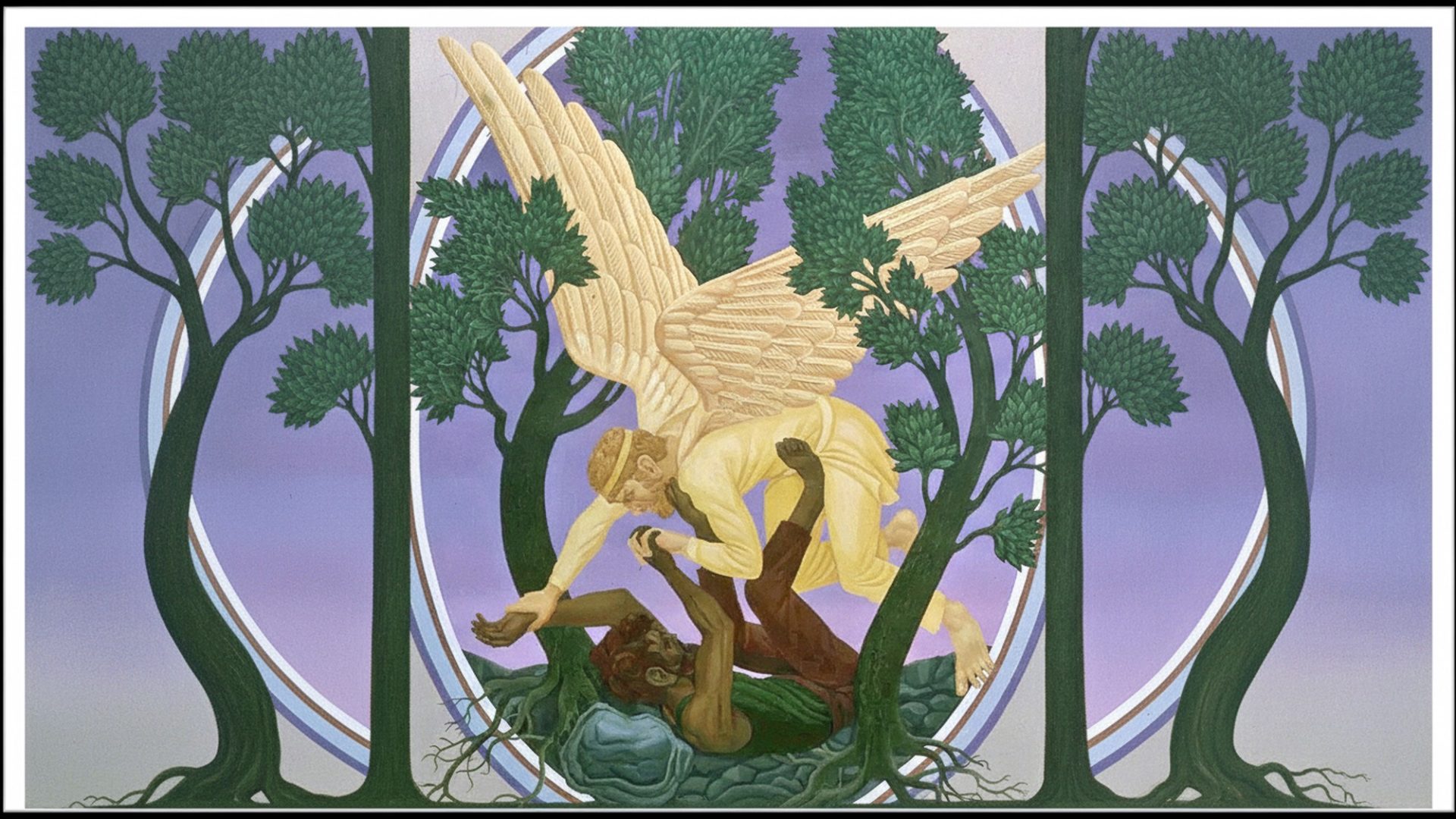
You’ve probably heard it before, in that nagging voice that suggests your doubts and questions make you somehow less worthy of spiritual community. Perhaps you’ve wrestled with the virgin birth, struggled with biblical literalism, or found yourself wondering if your well-considered beliefs would be enough to get you asked to leave.
You’re not alone in this struggle, and you’re certainly not unwelcome here. The American Christianity narrative often gets told through the lens of theological conformity, as if all Christians everywhere must believe the same evangelical tenets. But under the surface, this story has always been far more complicated, with scholars identifying upwards of 45,000 different Christian denominations and probably no two people in any congregation believing exactly the same things.
Consider the strange story from Luke’s Gospel, where Jesus debates resurrection theology with the Sadducees using a bizarre hypothetical about a woman married to seven brothers. Beyond its strangeness lies something profoundly enlightening: this is a story about two groups of religious people who disagreed on a significant question, had a conversation about their differences, learned from each other, and went on with their lives. No excommunication. No shaming. No religious violence. Just dialogue and mutual respect.
“In Jesus’s time and place, sparring over beliefs was not evidence of opposition. For Jesus, sparring over beliefs was evidence that the parties took each other seriously and that they thought they had something to learn from each other and that the relationship was worth arguing over.”
You’re being given permission here, permission to work out your own truth individually and together, permission to think for yourself, permission to share your beautiful ideas, and to see beauty in your neighbor’s perspective. While Christianity’s story is often told as a series of breaks and boundaries over disagreements, this church tells a different story: a story of unity and not despite our differences but because of them.
You can exchange ideas, trade perspectives, take what is useful, and leave the rest behind. This is what it looks like when disagreement becomes a creative force instead of a reason to separate—when you discover that the beauty lies not in conformity, but in the sacred space where different truths meet and learn from each other.