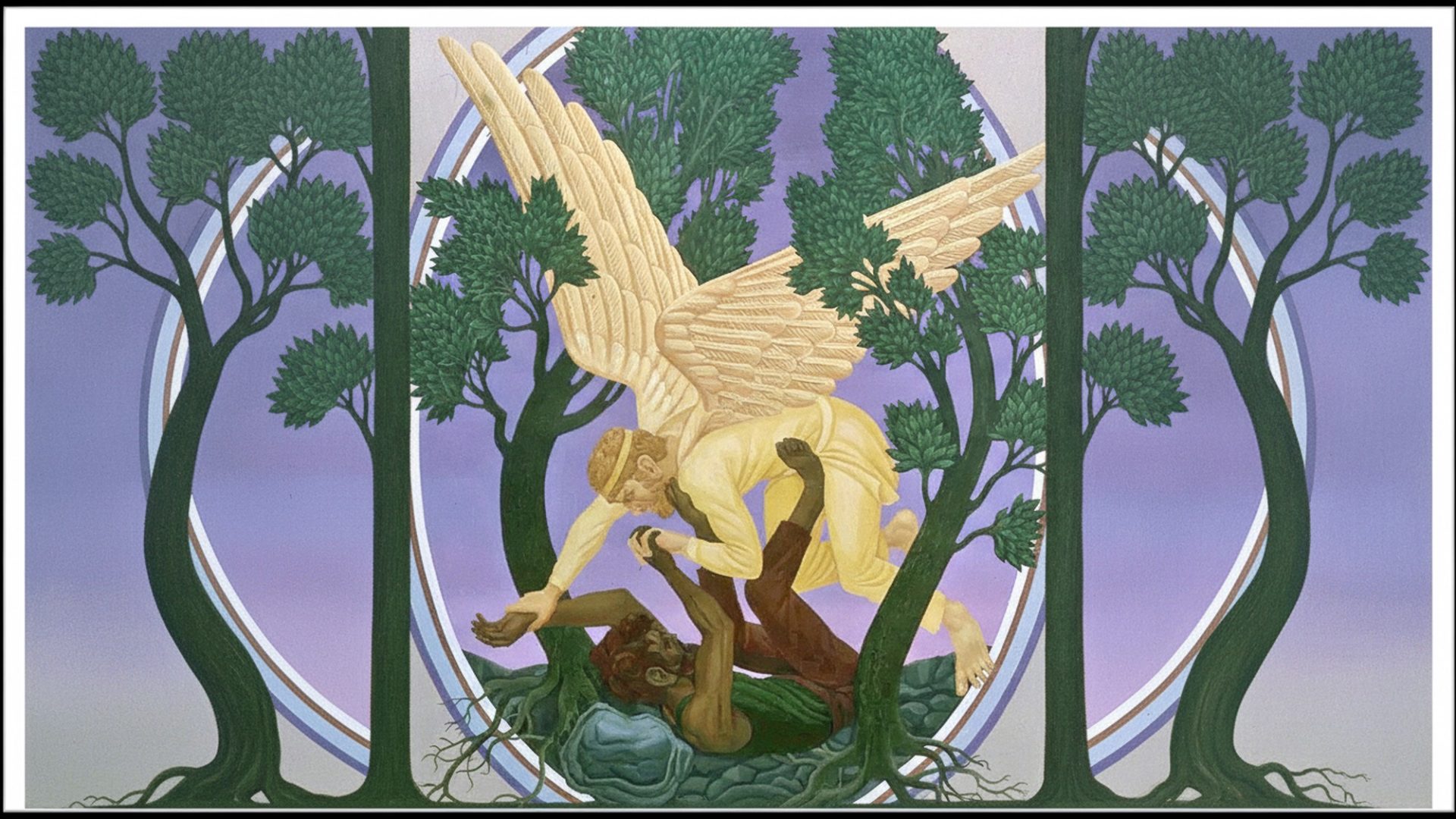
When you think about temptation, you probably picture something dramatic: a cosmic battle between good and evil, a wilderness showdown with the devil himself.
But what if the most honest exploration of why we do the things we do starts not with Jesus in the desert, but with a teenager named Augustine stealing pears he didn’t even want on a night when nothing good was going to happen?
In the United Church of Christ, you’re invited to wrestle with these questions for yourself, with questions about sin, human nature, and the inexplicable choices that still have you reflecting years later. You discover that only 37% of UCC churches have formally declared themselves open and affirming, that theological diversity is not a weakness but a sacred trust, and that the freedom to think for yourself is both liberating and demanding work.
Augustine’s pear tree becomes a mirror for your own moral life in ways that the gospel temptation narrative sometimes cannot. Where Jesus in the wilderness is “so Jesusy”, confident, self-assured, never truly in danger of failing, Augustine is painfully, beautifully human. He stole fruit he didn’t need, prayed for chastity “but not yet,” and even interpreted a baby’s hungry cry as evidence of a sinful nature.
His relentless honesty about the gap between intention and action speaks to something you recognize in yourself: those moments when you do the wrong thing not because some grand tempter appeared, but simply because you could.
“The devils we know are all the familiar things that tempt us and seduce us with their familiarity and how easy it is to want them.”
As Lent begins its slow arc toward Holy Week, you’re invited into a season not of dramatic spiritual warfare but of quiet, honest introspection.
Meet the devils you already know: the everyday choices, the comfortable temptations, the patterns you’ve carried for years, and have a real conversation with them about what they know about you.
Then, once you’ve learned what they have to teach, do what Jesus did in his story: set yourself free from the past and turn your face toward a future shaped by self-knowledge, grace, and resurrection hope.