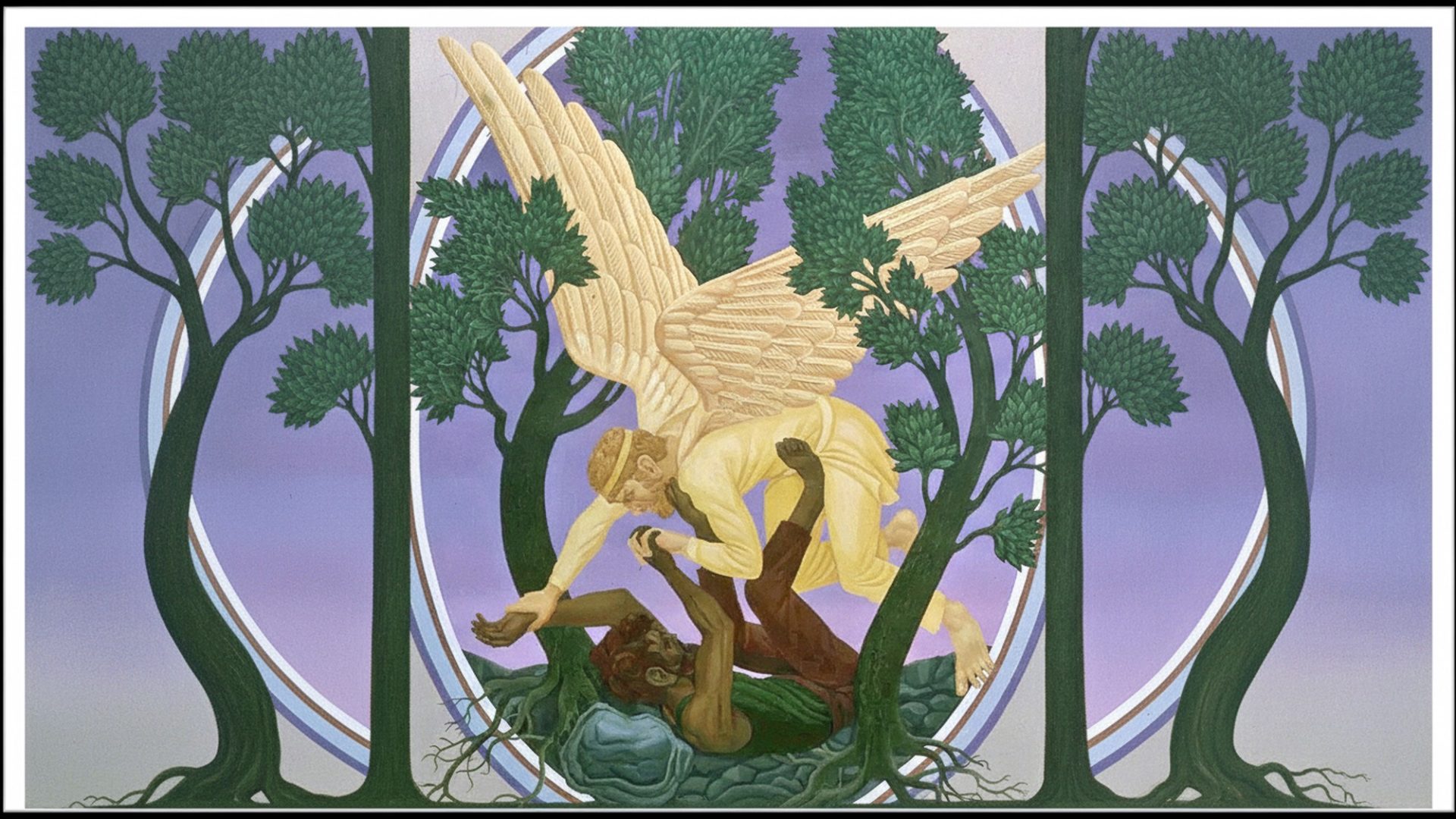
When you think about saints, you might imagine extraordinary people performing superhuman acts of devotion. But the Protestant Reformation challenged that hierarchical view 507 years ago, insisting that everyone (not just priests and canonized saints) has direct access to God.
The principle of “the priesthood of all believers” meant something radical: that teachers, miners, farmers, truck drivers, and yes, even investment bankers are all called by God, and everyone’s work is holy. This message becomes even more powerful when you consider who reflects the divine image. The immigrant waiting at the border reflects the divine.
People of all genders, abilities, sexualities, and races reflect the divine. Whether someone can afford groceries or not, whether their job is prestigious or not, they reflect God’s image. When you practice Christianity, you’re simply practicing the art of looking at everyone and seeing the divine reflection in them.
“Our sacred worth does not depend on anything extraordinary and it does not depend on anything superhuman. Our sacred worth comes from our ordinary humanity. Our sacred worth comes from the ways all of us hold a mirror up to the divine and reflect it back.”
On All Saints Day, you celebrate both the universal and the particular. You recognize the extraordinarily ordinary calling each person has while also maintaining relationships with those most dear to you who have passed on.
Through the practice of communion, which began as a memorial meal among Jesus’s followers, you connect not only with each other here and now but with all the saints across time and place. At this table, you meet God, you meet Jesus, you meet each other, and you celebrate a community that transcends time itself. As the United Church of Christ says: all means all.