By Rev. Jocelyn Emerson & Larry Strawser
In this Earth Day blog series, Pastor Jocelyn will offer a meditation, followed by a reflection by one of the members of our Creation Justice Ministry.
If you were at our recent Stewardship Town Hall, you had the opportunity to hear me talk about one specific word in Genesis 1:26. Before I dive into the specifics of the Hebraic tradition’s creation story, it is important to remember that all spiritual traditions have creation stories.
These creation stories teach us about our humble beginnings and how the Sacred brought all things into being. The creation stories serve as a reminder of Spirit’s instruction to us to be good stewards and custodians of what the Sacred created.
The issue with the Hebraic creation story, at least in the Christian translations of the Hebrew Bible, is the use of the word “dominion” or “subdue.” Most of the translations write:
“God blessed them (humanity), and God said to them, ‘Be fruitful and multiply, and fill the earth and subdue it; and have dominion over the fish of the sea and over the birds of the air and over every living thing that moves upon the earth.’”
This translation is often poorly interpreted as God creating all things to fulfill human needs. Therefore, we, as humans, can use the resources Earth has as we chose. This is a wrongful interpretation.
The Hebrew word is actually better translated as “steward.” And the best translation of that verse (in my opinion) comes from the Priests for Equality’s translation of the Torah:
“Then God said, ‘Let us make humankind in our image, to be like us. Let them be stewards of the fish in the sea, the birds of the air, the cattle, the wild animals, and everything that crawls on the ground.’”
The use of the word steward shifts our understanding of what our Creator is requiring of us. Genesis chapter two helps us deepen that understanding of stewardship.
Genesis chapter two is another telling of the Creation story. In this chapter we learn:
“The Lord God took the earth creature and put Adamah (earth creature) in the garden of Eden to till it and keep it. And the Lord God commanded the earth creature, “You may freely eat of every tree of the garden; but of the tree of the knowledge of good and evil you shall not eat, for in the day that you eat of it you shall die.’”
God creates Adamah (earth creature) to till the garden of Eden. God gave an instruction that humans could eat of the plants of the garden except for the Tree of Good and Evil. That was to be left alone.
What I find interesting here is that God’s job for humanity is to till, to care for, what God has created. Not to have dominion over it as humans see fit.
These two stories go hand in hand. Together, they bring an understanding of what it means to be stewards of Mother Earth and all God’s Creation.
Stewardship of Mother Earth and all God’s Creation is about:
- caring for, not reaping what we want
- tending, healing creation, not taking away from
- when we need to use its resources, replenishing what we have used
- when we harvest, keeping some of our harvest to replant the next season
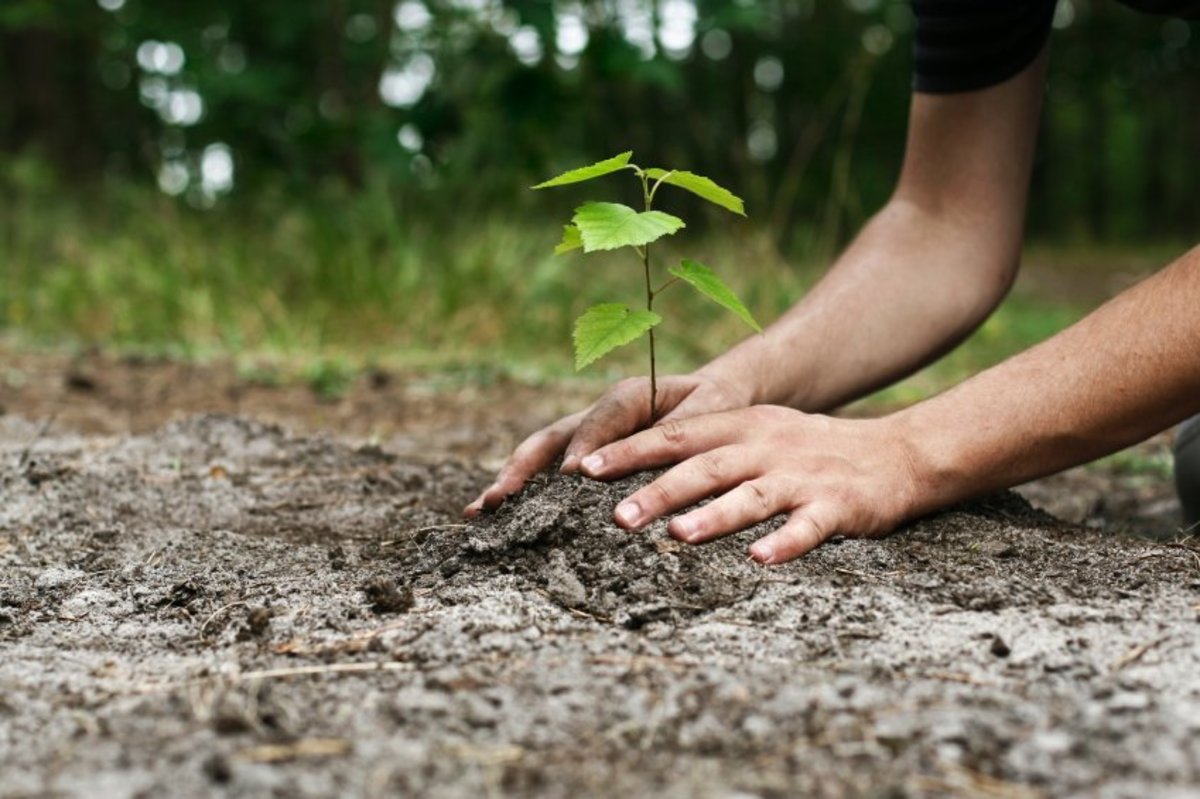
The imagery of being the gardener requires us to engage the stewardship of Mother Earth and Creation from a sustainability perspective, from a place of humble hard working, hands in the earth, partnership.
We have, as a culture, lost this understanding. Many take our earth for granted, ignoring her hurt and pain.
More and more of us are awakening to the need to truly care for Mother Earth and our resources. We are stepping into a theology of ecology and stewardship.
Reflection Questions:
- How are you being a steward of Mother Earth?
- What in your life is preventing you from deepening your stewardship of God’s Creation?
Prayer:
Gracious God, your amazing love extends through all time and space, to all parts of your creation, which you created and called good… As people of faith, we are called into covenant. Your covenant of faithfulness and love extends to the whole creation. We pray for the healing of the earth, that present and future generations may enjoy the fruits of creation, and continue to glorify and praise you. Amen.
~ from the Web of Creation website. http://www.webofcreation.org/
Response by FP Member Larry Strawser
When I review the latest findings of the scientific community and learn that the dire predictions of the effects of climate change are now being fulfilled and deemed to be even worse than projected, I shudder for Mother Earth. When I remember that I live in the richest country on the planet while my political leaders—elected by a slim majority of voters—have abandoned efforts to reduce global warming in the name of “economic prudence,” I mourn for my grandchildren and future great-grandchildren who will suffer because of my generation’s reckless, self-centered behavior. I bemoan the fact that I am just one person and that, by myself, I think I cannot do anything to prevent the worst effects of climate change.
But then I remember that I am not alone in my belief that Mother Earth’s ecosystems are in great peril—there are many tens of millions of people who also believe as I do. If all such like-minded individuals did what they could to be good stewards of Mother Earth, it would make a difference.
Every individual can do “little” things that together will significantly reduce their individual carbon footprint. Here are a few of the things from the United Nations website (https://www.un.org/en/actnow) you can do to be a better steward of our planet:
- Save energy at home by reducing your heating and cooling use and switching to LED light bulbs and energy-efficient electric appliances.
- Walk, bike, or take public transport whenever possible (this lowers your carbon footprint and increases your health and fitness).
- Use less single-use plastic that cannot be recycled, generates over a billion tons of greenhouse gas emissions each year, and lingers for hundreds of years, much of which eventually ends up in the Great Pacific Garbage Patch.
- Reduce, reuse, repair, and recycle as much as you can because the electronics, clothes, and other items you buy cause carbon emissions at each point in production.
- Eat more vegetables, fruits, whole grains, and less meat and dairy to substantially lower your carbon footprint.
- Throw away less food because when you do, you are also wasting the resources and energy used to grow, produce, package, and transport it, while rotting food in a landfill produces methane, a potent greenhouse gas.
- Speak up and get others to join in taking action, because it is one of the quickest and most effective ways to make a difference.
Being a good steward of Mother Earth is a task for all of us, because it concerns all of us. No one can do it all alone. Remember you are not alone in your beliefs. We can do it together.