With the new administration beginning, we thought it was important to offer a blog about Christian Nationalism. First Plymouth does not practice or support Christian Nationalism. However, we do need to understand what it is, what the central tenants of its “theology” are, and how it distorts and corrupts the way of Jesus.
Christian nationalism is a political movement that tries to blend Christian religious identity with American national identity. Its supporters believe that being American and Christian should be deeply intertwined, which accurately describes American nationalists. They believe the United States should be governed primarily by their interpretation of their Christian values, which should shape everything from our laws to our daily lives. This movement also represents a political agenda aimed at defining America as a ‘Christian nation’ and influencing public policy.
When we look at Christian nationalism, we see religious groups and people who firmly believe America was established as a Christian nation from the start. They want Christian beliefs woven into how our government. You’ll often hear them interpret current events and social issues through a religious lens, and they typically oppose the idea that church and state should be separate.
This is quite different from the polity of the United Church of Christ. One of the main tenets of the UCC is the separation of church and state. We, in the UCC, also believe in the freedom of, for, and from religion, meaning that each citizen of this country has the right (by the Constitution) to choose their faith and religious expression or choose not to engage in any faith or religious expression. The UCC has a catchphrase, That All May be One. This invites us to recognize that all our religious beliefs and expressions, from Christian to Jewish to Muslim to Buddhist, connect into the same Energy that we, in the UCC, talk about as God.
As members of the United Church of Christ, we believe that our faith invites us to engage in politics and public life to bring forth Justice, Equality, Peace, Grace, Compassion and Mercy. Christian nationalism engages in politics and public life to give Christianity and other religious groups a privileged place in government and public life. Christian nationalism seeks to use its power over people of other faiths and spiritual expressions and to discriminate against them. This focus on Christian Nationalism creates tension with our Constitution’s principles about religious freedom and keeping government separate from religion.
Key Beliefs and Practices of Christian Nationalism
Christian nationalism distorts the message of Jesus.
Jesus stood for and with the poor, the widowed, the marginalized, and the oppressed. The central message of Jesus was one of liberation for all people. Jesus preached Love, forgiveness, mercy, grace, and justice. He called out the corruption in the Temple that made the poor poorer and the wealthy richer. He flipped the power structure of the day upside down in his parables. Jesus was about shared power and empowering.
Christian nationalism, on the other hand, seeks to use power over others to have moral authority and force their belief systems on the people. They take Christian Scripture out of context and distort it to prove their point. For example, they may quote Jesus’ response to Judas when the woman anoints Jesus’ head with oil before his crucifixion, “You will always have the poor among you, but you will not always have me,” and determine that this means Christians do not have to take care of the poor. They will say having a personal relationship with Jesus is more important than caring for the poor. This is, of course, a distortion of the scripture. Jesus was sharing with the disciples that his time with them was ending. He was always clear that their job was to care for the poor, the marginalized, and the oppressed.
Christian nationalism takes this distortion of our sacred texts into their political rhetoric. They use this distorted understanding of scripture to back their political agenda and frame their political opinions and agenda as divine mandates.
Christian nationalists govern using the influence of their faith. They assert that policies should reflect the principles of their particular brand of Christianity. This belief underscores a commitment to merging ethical imperatives rooted in a distorted understanding of the Christian faith with the practical needs of a diverse society. They emphasize Christian power in the public square and shape governance to reflect a Christian identity.
Christian nationalist ‘theology’ is antithetical to the way of Jesus as expressed in our Christian scriptures.
Christian Nationalism and Public Religion Research Institute
As a progressive Christian church committed to justice and inclusion, we believe it’s important to understand Christian nationalism and distinguish it from authentic Christian faith.
To learn more about the current state of Christian Nationalism, you can review this research report from the Public Religion Research Institute on Christian Nationalism. Christian nationalism is a political ideology that attempts to merge Christian identity with national identity. It suggests that America should be an explicitly Christian nation where Christian beliefs determine our laws and policies. This stance contradicts our democratic principles and our understanding of Jesus’s teachings.
At First Plymouth, we follow the tradition of the United Church of Christ (UCC), which has long advocated religious freedom and the separation of church and state in public schools. Our UCC heritage includes the religious dissenters on the Mayflower seeking freedom from state-imposed religion and the Constitution’s framers, who enshrined religious liberty as a fundamental right.
We believe that authentic Christian faith calls us to:
- Welcome and celebrate people of all faiths and backgrounds
- Stand up for the marginalized and work toward justice for all
- Engage in respectful dialogue across differences
- Separate our religious convictions from demands for political power
- Honor the rich diversity of beliefs in our democracy
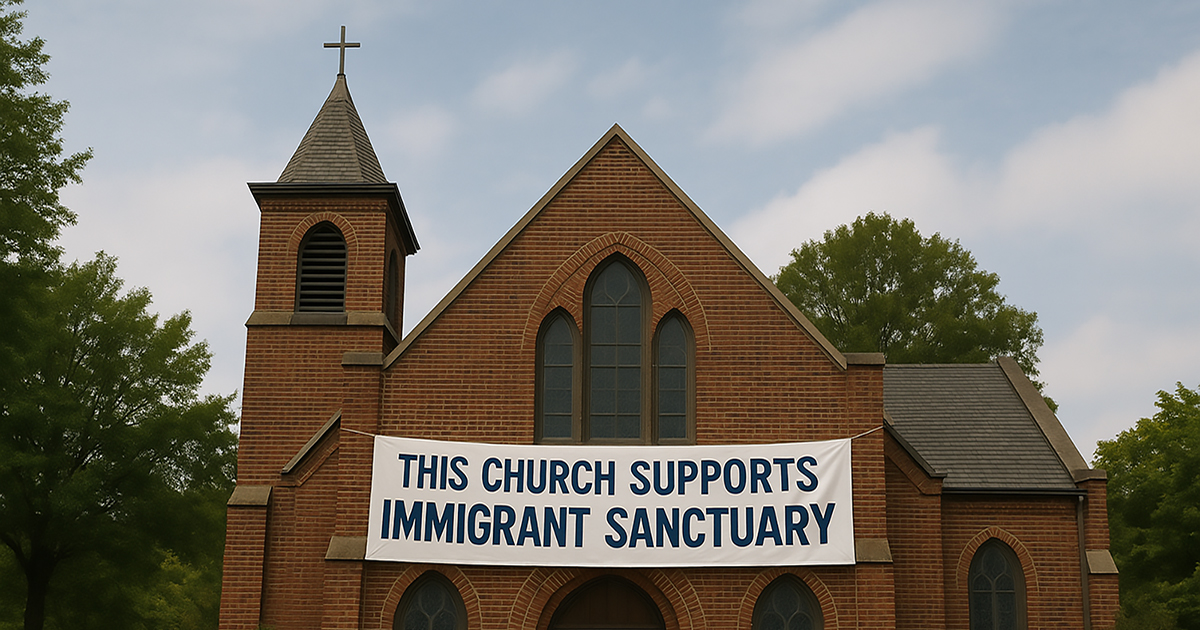
When faith becomes entangled with political power and nationalism, it can lead us away from Jesus’s core message of radical love, inclusion, and care for our neighbors. As a Creation Justice church that celebrates LGBTQ+ individuals, works for racial equity, and welcomes immigrants, we recognize that Christian nationalism often promotes policies that harm the very people Jesus called us to love and protect.
We invite you to join us in putting faith into action through service, not through seeking political dominance. At FPCC, we aim to work toward a just, caring, and inclusive world for all people, guided by love rather than fear.